Unknown's avatar

A terrific review of Evie Woolmore’s The Salt Factory

The Salt Factory by Evie Woolmore“Evocative, gorgeously written, this haunting tale of discovery will have you madly page turning until the wee hours.”

What more could you want from a book? allonymbooks’ fellow spiritual novelist Leigh Podgorski has reviewed Evie Woolmore’s latest novel, The Salt Factory, on Amazon and Goodreads, and she obviously really loved it! She gave it five stars and her review captures perfectly the essence of the book. She didn’t receive a review copy from us, so her opinion is genuinely impartial and honest.

If you want to see what all the fuss is about,  why she thinks that the heroine Thelonia Jones is a ‘perfectly realized Victorian heroine’ and how the ‘ethereal characters…give the novel its luminescence and sheen’ then read an extract of the book, and find out more about Evie’s three magical realist novels. Or better still, go to Amazon and buy a copy for yourself!

Unknown's avatar

Interview with Zoe Brooks, magic realist writer and reviewer

This week, allonymbooks novelist Evie Woolmore interviews author Zoe Brooks about their mutual interest in magic realism and Zoe’s project to read widely in the genre.
Evie Woolmore: Zoe, you explain on your blog that you started reviewing magic realist books because people told you that’s what you wrote. What qualities were you attributing to your own fiction when you started writing that you now identify as being magic realist?
Zoe Brooks: The Healer’s Shadow trilogy books and Mother of Wolves are all set in a non-specific world, which could be our world but isn’t. The world is very realistic – influenced by my study of history and my travels – and so it is unlike the incredible fantasy worlds of most fantasy books. Looking back I realize I was influenced by One Hundred Years of Solitude, in which Marquez creates the town of Macado, in an unspecified country which could be somewhere in South America but isn’t.  The world of my books isn’t full of spells or magic, but there are Shadows.  The heroine of the trilogy, Judith, is born with a Shadow. Shadows appear to be human but aren’t in some ways. Through the course of the trilogy, Judith and the reader understand more and more about what Shadows are. 
 
Most magic realism is about two cultures meeting – often a western realist culture and an indigenous culture which believes in magic. The trilogy is partly about the clash between the new university-based medical doctors and traditional healers, such as Judith. In The Company of Shadows, the final book in the trilogy, Judith completes her training as a healer. As a result what might be called “magic” appears, but then it depends how you look at it. I think this ambiguity is a common feature of magic realism. 
EW: Yes, I agree that ambiguity and a clash of cultures are something I would certainly identify as being magic realist. How useful do you think ambiguity is as a creative tool for a writer?
ZB: It’s a very useful tool. It is also true to life – life is ambiguous. If you are using a first-person narrator I would say ambiguity is a necessity, as your central character can’t be certain of everything.
Ambiguity can be used to keep the reader turning the pages: what’s going on here? But whether you can still have ambiguity at the end of the book is another matter.  Some people want everything wound up and explained at the end. In magic realism that doesn’t always happen – sometimes the magic is just part of the world and isn’t explained, other times the reader cannot be clear if the magic was actually in the head of one of the characters. Personally I am quite okay about that when I read a book that ends in this way, but other people aren’t. In the case of The Healer’s Shadow trilogy, the last book answers a lot of people’s questions.
EW: What unexpected surprises did you discover among the books you read and reviewed, in terms of new authors, books you weren’t expecting to enjoy, or clever uses of magic realism?
ZB: What a question! I’ve read over ninety books for the magic realism blog, so where do I start? Of the classic magic realist books the one that blew me away was Pedro Paramo. It’s poetic, experimental and just wonderful. Previously I had read very few short story collections, but magic realism works well in short stories. Moscow But Dreaming by Ekaterina Sedia has to be one of my favourite books so far and Diving Belles by Lucy Wood is a lovely evocation of the magic of Cornwall. In terms of clever uses of magic realism I suppose the use of magic realism in Graham Joyce’s psychological suspense novel The Tooth Fairy was an eye opener for me as a writer and has influenced the book I am currently working on. I had not experienced Chicano literature before and I loved the historical biography The Hummingbird’s Daughter by Luis Alberto Urrea. Hardly a surprise as it’s about a traditional woman healer, which is also the focus of my Shadows trilogy.
 

EW: I too very much enjoyed Lucy Wood’s Diving Belles, and it reminded me of how different the narrative drive is in short stories. You mentioned the influence of The Tooth Fairy, so I’m curious what else you have learned about your own writing of magic realism from reading so widely in the genre?

ZB: I don’t subscribe to a view that magic realism is a form of escapism. I have just finished Burning Angel by James Lee Burke, which is a gritty detective story with an element of magic realism. Your book can be very real and also magical. The more I read the more I see magic realism as a way of exploring reality in its totality. I’ve always tackled hard issues in my books – The Healer’s Shadow trilogy is about overcoming prejudice and persecution. I believe magic realism can allow you do this in a deeper way.

EW: So, can you share with us what you are writing at the moment?

ZB: My current work in progress is set in modern Prague. It’s a place I know very well, as I spend half my time in the Czech Republic. Prague may be a bustling modern city, but it is also one where almost uniquely you are aware of a magic reality alongside the normal world. I am always surprised how many Czechs believe in angels, devils and nature spirits. The novel is a psychological suspense. A young British woman has gone missing. As we meet people who knew her and read her letters and journal, we find ourselves in a shifting world of reality. In a fortnight I will be flying off to the Czech Republic again, where I will be finishing off the first draft of the book. 

Zoe, it’s been a real pleasure talking to you about magic realism. Thank you very much for sharing your thoughts.

You can find out more about Zoe, her novels and her magic realism blog at her website. You can find out more about Evie Woolmore’s magic realism novels here at allonymbooks, and read Evie’s review of Zoe’s first Healer’s Shadow novel here.


Unknown's avatar

Indie Book Reviews (12): British Indie Authors (3)

This week, allonymbooks author Evie Woolmore reviews Alan Williams’ novel The Blackheath Seance Parlour (available from Amazon)

My own interest as a writer in the spiritualist world of the Victorian and Edwardian eras drew me to this novel, but if you are looking for a good historical novel with plenty of authentic detail then there is much to appeal here. Middle-aged sisters Judy and Maggie Cloak have inherited a shop in the windswept, weather-beaten village of Blackheath on the outskirts of east London, but it is doing badly in its current incarnation as a sweetshop and the Cloak sisters are getting desperate. Judy has ambitions to escape both literally and metaphorically through a gothic novel she is writing, while Maggie seeks solace in drink from her sense of abandonment as a daughter and a prospective wife. Their lives change with the arrival of the rather mysterious Mrs Walters, a woman of some spiritual ability, who soon helps the sisters transform the shop into a focal point for many contrasting things: gossip, hope, faith, belief, mystery, and all the trappings of the occult. But the initial success of tea leaf reading is not enough for Maggie, Judy or Mrs Walters, and the story explores how the paths of each woman diverge as they seek their own resolutions with the past and the future. The novel is also intercut with long extracts from Judy’s novel, through which she explores certain aspects of her own reality and the society to which she imagines belonging.

The other main character in this book is the village of Blackheath, and Williams notes at the end of the book that he wanted to do justice to the community and its history as part of his aim in writing the novel. He captures very effectively the bleakness of the heath as it must have been in the Victorian era, and with a subplot around the murder of two girls, he infuses a certain chill in the already atmospheric spiritualist action. He has also done great justice to what must have been substantial research of spiritualism in the Victorian era. In the scenes where the sisters and Mrs Walters are reading tea leaves and the glass ball, and later the seances themselves, he has drawn very authentically on reports of the time, both of the fake and the genuine, and that level of accuracy will please readers of historical fiction and those interested in spiritualism.

It’s interesting too that he has essentially focussed on three middle-aged women, and he explores the social confinement these women must have felt in being unmarried while also seeking to be independent. Each woman is seeking something different as a consequence, and while their stories are interesting I wasn’t always as convinced by the historical authenticity of their actions and particularly some of their dialogue. Without giving too much away about how the story develops, some more spiritually-inclined readers might think it a shame that the most talented character spiritually was also the least attractive personality. It also might be seen by some readers as not doing much for a feminist agenda: the social emancipation and independence each of these women is seeking is in a way undermined by the lengths they go to to achieve what they want, and in some ways none of the women comes out of it very well. I was also a bit disappointed by the way Mrs Walters’ storyline resolved itself and not entirely satisfied with what happens to Maggie. But to discuss that at any length would be to spoil it for those who haven’t read the book.

As in my own spiritualist novels (search for Evie Woolmore), there is some discussion about the science vs religious faith vs spirituality conundrum, and this appears in the last part of the book only. It would have been interesting to do more with this much earlier in Maggie’s arguments with Father Legge, although it makes a very fitting climax dramatically in other respects. The book – though quite long – is generally well-paced, although I personally didn’t engage as much with the extracts of Judy’s novel. I think there could have been fewer of them and shorter ones too, without detracting from the part they played in reflecting some of the real-life action and the issues that arise for Judy as a consequence of writing the book.

This is a historically detailed novel, which I’m sure residents and those familiar with Blackheath will much enjoy for its local portrait, and which will provide a good escape on a wintry evening or two.

*****

Evie Woolmore is the author of historical novels with a spiritual twist. If you enjoyed The Blackheath Seance Parlour, you will probably enjoy her novel Equilibrium too, available at Amazon.

Unknown's avatar

In admiration of…. Rex Stout

In the latest in a series of blogs, new allonymbooks crime author EJ Knight discusses some favourite crime writers. This week, American writer Rex Stout.

Rex Stout is a name which many readers may be unfamiliar with, indeed amid the wash of gritty Nordic and British crime, there might seem to be little to recommend a writer whose novels are at first glance so mild-mannered and dated to the time of their writing. Indeed, much of the action takes place in the brownstone home of a man who weighs “one sixth of a ton”, rather than on the mean streets of pre- and post-WWII New York. Yet the thirty or so novels Stout wrote featuring the intellectual giant Nero Wolfe, and his legman – the witty ladies’ man Archie Goodwin – are not only clever puzzles but also a fine portrait of a city and a country going through periods of enormous social change. The plots range widely from corporate and industrial intrigue, families in crisis, diplomacy, politics and the criminal underworld, to the recurrent impact of the war both collectively and individually. Wealth is perhaps more prominent than poverty, as both Wolfe and his clients live comfortably and Archie Goodwin’s taste in ladies generally runs to the more refined, such as socialite heiress Lily Rowan. But the darker, dirtier face of the city is glimpsed often enough in the diners and dark alleys observed by Wolfe’s secondary team of private detectives such as Saul Panzer.

Wolfe and Goodwin are in a marriage of unequals yet they complement each other most brilliantly. Wolfe is huge, temperamental, obsessive about his food, devoted to his orchids, a man of such utter ritual that he will not be disturbed for any crisis, even by his closest associates – Archie Goodwin and Fritz (the chef and majordomo). He refuses to leave the brownstone for anyone – client or cop – and could be seen as the extreme of the eccentric, individualistic private detective. Crimes are puzzles, criminals are like museum exhibits, to be studied and observed from many angles while Wolfe barely moves from his office chair. By contrast, Goodwin is the everyman: a connoisseur of women and violence, he is Wolfe’s eyes and ears out in the world, gliding easily between the criminal classes and the monied aristocracy, driving all over the city and the state, and it is he who tells the stories of the cases that Wolfe is asked to solve, and who paints the portraits of those entangled in the crimes.

The dialogue and first person narration in these books is what drives them both in story and quality. This quote from The Silent Speaker (1946) is typical of the way Stout captures the relationship between Wolfe and Goodwin:

“Nonsense.” Wolfe was peevish. “With an ordinary person that might be necessary, but Mr. Goodwin is trained, competent, reliable, and moderately intelligent.”

We aren’t told what Archie thinks of being described by his employer as “moderately intelligent” and it doesn’t matter, for Archie reports things exactly as they are, which is part of what makes him such a good detective. Hence his use of the word “peevish” – perhaps a less fashionable descriptor now yet for Goodwin it pins his employer’s mood precisely to the map, and for Stout it avoids slowing the rapid fire pacing of the dialogue with overly heavy description. But hence also the precision with which, in the same novel, Stout has Archie report the death of a beautiful woman outside the brownstone and chart the effect of her loss on him:

I do not ordinarily hunt for a cave in the middle of the biggest excitement and the most intense action but this seemed to hit me in a new spot or something, and anyhow there I was, trying to arrange my mind. Or maybe my feelings. All I knew was that something inside of me needed a little arranging.

And at the end of the same short chapter:

I had been sitting in my room twenty minutes when I noticed that I hadn’t drunk any milk, but I hadn’t spilled any from the glass.

There is little angst in these books, no great emotional swings and roundabouts as experienced by some of the other great detectives who get so personally involved. Nero Wolfe solves crimes for money, he is perhaps an intellectual mercenary for he forms no attachments to the victims. His endless battle with Inspector Cramer of the police is one for control of the facts and of his privacy – perhaps in equal measure – and the police are  as necessary an evil in tidying up and enacting the solutions Wolfe reaches, as the crimes are for Wolfe to fund his peculiar lifestyle.

So why would you read these books? They are historically dated, favour dialogue over action and the questing of motive over the complexity of plot. Stories are sometimes convoluted, there are often innumerable characters (all beautifully named) and Wolfe is at times so metronomically confined by his own routines as to be close to a parody of himself. But that is to oversimplify the charm of the books – any fan of Christie or Allingham or Sayers would find these just as compelling – and to belittle their lessons for us as writers. For they are a masterclass in how to use words very exactly, how to create a world without being too lavish in description, how to home in on what we really need to say about our characters. Not a word is wasted. The books rush past as easily as a fat airport paperback, but they do so without gloss or embellishment. Every sentence counts, every single observation Archie makes tells us what we need to know, and I for one could listen to him reading the telephone book.

*****

EJ Knight is the author of the Lucille Landaus series of historical crime novels, the first of which –  Broadway Murder of 1928 – is excerpted here.

Many of the Nero Wolfe books are still in print and several have now been issued for Kindle. If you haven’t encountered Nero Wolfe and Archie Goodwin before, A&E made a series of films for television based on a number of the stories. Starring Maury Chaykin as Nero Wolfe and Timothy Hutton as Archie Goodwin, they are good adaptations of the novels and also fun to watch.

Unknown's avatar

Indie Book Review (11)

This week, allonymbooks novelist Evie Woolmore reviews The Written by Ben Galley, founder of Libiro.

I’ll say up front that I don’t read a lot of fantasy, but I loved the idea of what is written being such an important part of this story, and that was what attracted me to it – that, and the stunning cover design. So I’m delighted to say that this is a well-crafted, imaginatively constructed story that is very readable, regardless of whether you read a lot of fantasy or this is your first foray into the genre. It’s also the first in a series, which seems almost essential when writing fantasy, but will also please readers who have been quickly swept off their feet by this story.

A valuable item has been stolen, and its theft has brought a realm to the brink of war. Old enmities are being revived, and trust must be rebuilt between enemies if a far greater threat is to be overcome. But will time run out, and will the power of our hero be enough? This might seem like the plot to many a fantasy novel at the most general level, but Ben Galley has done a nice job of finessing the story with some lovely, well-imagined details. Farden, our hero (though not an enormously likeable one, perhaps) is a complicated fellow, driven yet a little lost, isolated and feared, yet inspiring fondness in his closest confidantes and strangers alike. He is also torn on the inside by a weakness that could literally render him powerless. His well-drawn vampyre adviser Durnus is very strongly characterised, as are the wonderful dragons Farden meets with their Siren riders, who are also beautifully described. I have the faint sense that Galley likes some of his characters more than others – I was less convinced by the drawing of a couple of them who I won’t name because I don’t want to hint at a spoiler – but the world of Emaneska, the towns, the huge buildings in which the most important action happens are all inspiringly drawn and will not disappoint any reader.

There’s a lot of action in this book – the fighting at which Farden is so proficient, and the use of magick (though less than I was expecting actually) – and also a lot of politics too, for this is at some levels a very political novel. It is about allegiances and loyalty, corruption and manipulation, weakness and strength. The first key revelation about two thirds of the way through was perhaps not as surprising as it could have been though, and I felt for a moment as if I was watching an episode of a US crime drama, because I was running out of possible candidates for the villain. However, this is a series, not an episode, and it is always a challenge to keep the momentum going well enough not only through this book but through those that follow. I agree with other reviewers who have pointed out Galley’s potential as a novelist, and what I think is admirable (perhaps because I don’t read a lot of fantasy) is that he has not created an over-complicated world, littered by its own creative profusion. There are not so many characters, races, languages, mythologies and so on that one cannot keep them all to mind if you put the book down for a day or two, and I don’t intend it as a weakness when I say that at its heart this is quite a straightforward tale.

If I have one particular criticism it is that the narrative writing can be very dense at times. Having a solitary hero, and seeing so much of the world through his eyes, means that narrative writing outweighs the quantity of dialogue by quite a bit and it can make the novel feel rather one-paced in places. To some extent this is a feature of the genre, but for this reader, a bit more variety of pacing and more dialogue in general would have elevated this novel beyond being what is already a very good book.

Unknown's avatar

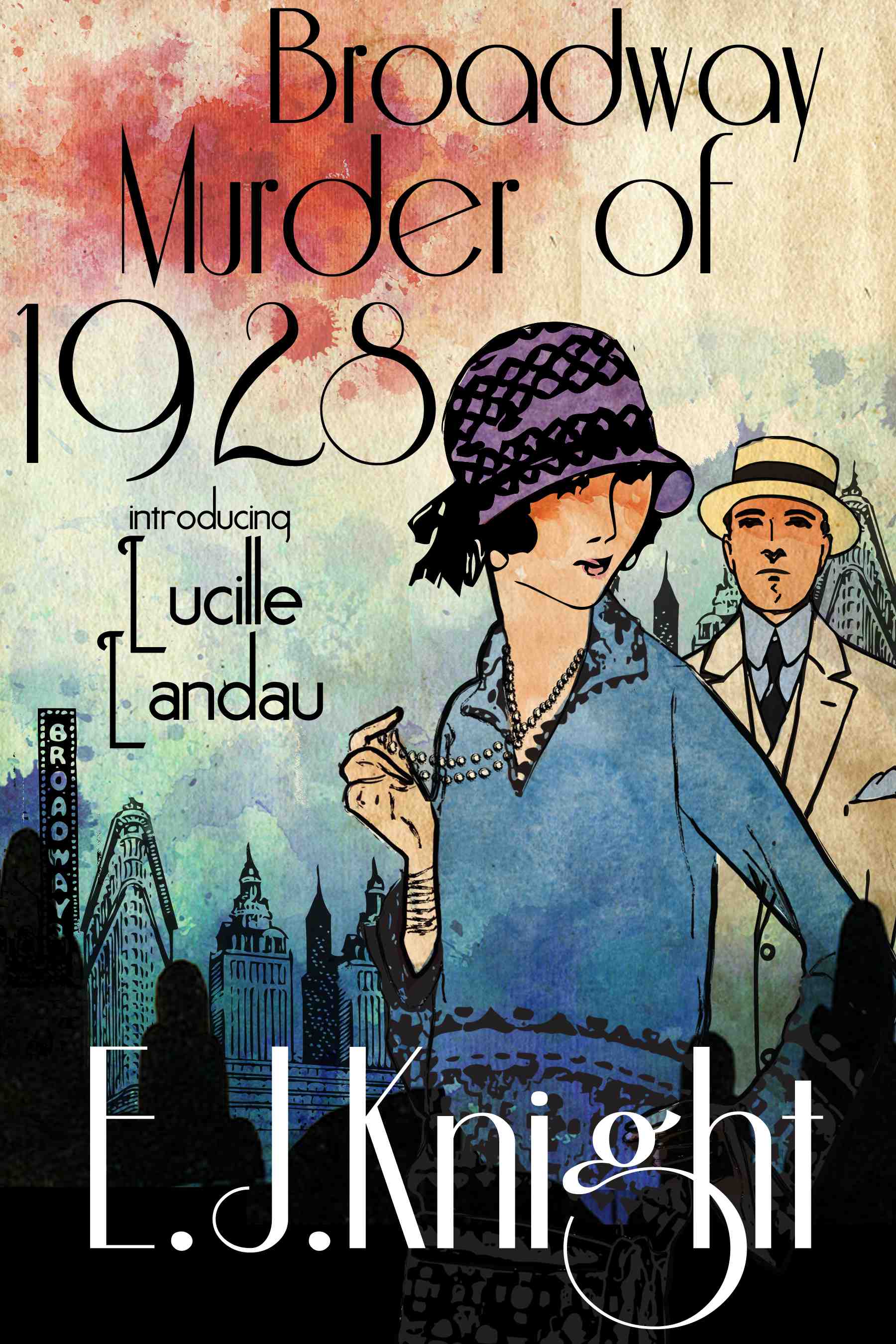
Broadway Murder of 1928 by EJ Knight: Exclusive Extract

Read an exclusive extract from the beginning of the latest allonymbooks book: Broadway Murder of 1928 by EJ Knight. Historical crime fiction at its best.

BMv6finalLowQ 

Mutti is standing at the end of the alley, ankle deep in blood. Old Mr Goldblum and his son Itai are standing either side of her, their hands resting on her shoulders, their beards glistenin’ in the yellowish light from the back door of the pub, their long black coats flutterin’ like crows’ wings. Someone’s playing ‘Potato Head Blues’ on the piano inside. It sounds like me playing, making the same mistake over’n’over before the stop-time section, before Louis Armstrong starts his solo, but when I look down I’m still standing out back and there’s a broken bottle in my blood-soaked hands.

‘Come now,’ they’re saying to her in Yiddish. ‘Come back to the factory.’

‘But who will mend my Lucille’s dress?’ Mutti’s saying in German, pointing at me.

‘It’s her own fault her clothes got torn,’ Itai says. He looks sadly at me as though he’s lost something very dear to him. ‘Someone has to sew on all our buttons now you are gone,’ he says to me in broken English. ‘Do not worry. She is not one of us, but we will still take care of her.’

Mutti starts crying. Mr Goldblum shakes his handkerchief out of the pocket of his coat and banknotes fall from it, dirty scraps of paper fluttering into the blood that swells in a pool towards him. I lurch to catch ‘em before they soak into the darkness but trip over something at my feet.

The man’s lying there, the man from the pub, the one who leered and drank and leered some more before he grabbed at me with his greasy fingers. He’s trying to sing his dirty songs at me again, but the dark gash at his throat bubbles and glitters as the air pops through. His trousers are round his ankles, but that swollen bit of flesh he tried to shove into me has shriveled back in on itself, into the shadows.

‘You ‘ad it comin’ to you, you little sow! You play the Devil’s music, you end up in hell—’ His mouth is moving but the voice is coming from behind me and I turn to find his friend standin’ there, his tankard still full and dripping.

‘We didn’t win the bloody war so you could come over ‘ere—’

He yanks me close, singin’ hard and loud in my face, his breath hot and beery, his spit pocking my cheeks, but the tune is wrong for his brutal words, it’s Brahms, like I used to play at Miss Worthington’s Music School on a Sunday afternoon, and someone’s whistling, shrill, like a copper’s whistle—

I’m trying to run, but my feet are stuck in that bastard’s blood, I can hear the clank of handcuffs at the end of the alley, Mutti’s crying for me as the handcuffs close over my finger, gold and hard, but I’m trying to shake them off so I can get to the end of ‘Potato Head Blues’—

It ain’t the first time I’ve woken up screaming.

My arms flail, throwin’ off the heavy hands that grasp mine so tight. I glance wildly around me. The unfamiliar ceiling, dirty white and edged with rust. The round window behind the sofa, nudging in its hinge as the gale batters it from outside. The whole tiny room is spinning round me and I feel sick. I struggle to sit up, shudderin’, grabbin’ on to anything that’ll steady me, but my eyes are still darting round, tryin’ to remember where I am. This is no jail cell, but I feel trapped right enough.

‘Lucille? Liebchen?’

I’m slow to remember someone was holdin’ me. I drag my eyes back to a young man kneeling beside the sofa. I frown at ‘im and he frowns back, deep creases in a pale forehead beneath a neat side-parting of fine blond hair, his eyes saucer-wide and black with longing behind his wire-framed spectacles.

Nur ein Albtraum—

‘A nightmare,’ I say, correctin’ him to the language I want to speak.

‘It is me,’ he answers, this time in heavily accented English. ‘You remember? I am Gregor?’ His eyes flicker to my hands, and I stare down at them. There is a thin gold band around my ring finger, a little too big even for my long fingers and strong knuckles.

I gulp down air and try to think, try to remember what happened last time I woke up screamin’. But it don’t get any easier.

The Victrola is cranking out a Brahms Étude, but the boat is rolling and the needle’s jumpin’, squawkin’ out the same unfinished bars again and again. I struggle off the sofa and go to it, putting the stylus back in its cradle. Without the music there’s nothing to hide the dreadful wrenchin’ of the trawler against the waves, the grunt of the steam engine beneath our feet or the drip-drip of water from the ceiling into a tin bowl in the corner. Glass bottles rattle in a cabinet on the wall. The cabin reeks of antiseptic and oil burnin’ in the lamps.

‘Lucille?’

I hear Gregor stand up behind me. As his hands settle on my shoulders the memories settle with ‘em, the endless blood drains away from the darkness of my imagination, and I remember. I can’t help lookin’ down at my finger again.

‘I’m sorry,’ I say, bright as I can. ‘It ain’t fair on you.’

I turn to face him and his hands drift gently down my arms, his thumb snaggin’ on a hole in the sleeve of the thin jumper I’m wearing. None of these clothes are mine. I stole some of ‘em, and borrowed the rest. When we dock in New Jersey I’ll probably go ashore in a blouse, combis and a pair of boots. Everyone on this boat needs all they can get if they’re going to survive.

‘I will buy you the new clothes,’ says Gregor. ‘It is just for now you must wear these.’

‘What kind of bride am I?’ I say, forcin’ a light laugh. ‘I steal your bed, stop you from sleepin’, and dress like a man.’

I glance at the tangle of blankets on the floor next to the sofa. This cabin is for a doctor workin’ and livin’ alone. There ain’t no married couples or families on this boat. The captain won’t have ‘em, no matter how desperate they are, no matter how much they’ll pay. It’s hard enough to dock a boat that shouldn’t be there. And people who are scared of being separated only draw attention to themselves.

I think of Mutti. When I told her what’d happened to me, when she realised there was no other way, she let me go quietly. She was only screamin’ in my dream. But I can hear her even now.

The marriage bed can wait, Gregor had said, time for that when we get home to Port Republic. But no amount of decency ain’t stopped him imaginin’ what I might be hidin’ beneath these shabby things, and his hands often linger when they draw a strand of hair from my cheek or pass me something I’ve dropped. I’d never believed in love at first sight, never even seen it before Gregor found me hopelessly wanderin’ the docks in Bristol. Oh yes, it was tinged with pity, I’m not daft enough to pretend it weren’t. But I felt the breath catch in his throat as he looked at me. And I was so desperate to get out of England I never considered I couldn’t learn to feel the same way.

I look round the room again. It’s his room alright. I barely know ‘im, but everything there is to know about my week-old husband is here in this room. The neatness of his surgical instruments cleaned and wrapped in their leather cases. A book of Shakespeare’s poetry abandoned on the blankets, pencil markings and underlinings the only sign that if he feels every word he don’t quite understand ‘em. The diplomas from medical school in New Jersey that hang above the clock. It swings on its chain against the wall, its hands dividin’ the face at something past two in the morning. Is that something past two in London or New Jersey, I wonder.

Suddenly my eyes sting with tears and I sag back against the Victrola. Gregor grabs at me and pulls me to him, his thin arms feelin’ uncertainly round my back, the sweet musty smell of cedar seepin’ out his clothes as he holds me. I cling on ‘cause I have no-one else, but my hands are balled into fists and I try not to feel the ring as it digs into my fingers.

‘Every person who takes this boat awakes like you do,’ he murmurs in my ear. ‘The dark. The smell. The wide sea everywhere. Ist eine Reise in die Vergangenheit.

Something in the crossing reminds us of the very thing we’s runnin’ away from.

Prison is what I dreaded for what I did back home.

But prison is where I am.

The next afternoon, Gregor brings me a present. He’s been down in the hold, the gloomy pit mockingly called Steerage by the others who journey in the decks beneath my feet, seein’ to a fellow with a bad wound in his leg. It’s a bullet wound. I knew that the minute I saw ‘im on the dock, the captain watchin’ while Gregor decided if the feller was fit to travel. But it seems his money was good, doubly good if you get my meanin’, and the captain let him board on condition that Gregor fixed ‘im up good enough to walk before we reached New Jersey. The boat only docks in New Jersey if the captain can guarantee the harbourmaster that his stowaways would pass the medical inspection if the boat was forced to dock proper at Ellis Island. He don’t give a damn about who we are or what we done that brings us beggin’ to his boat. But he don’t want no-one dyin’ or goin’ out their minds on the way over. And to be sure of that he needs a doctor, a good ‘un. A doctor with a good heart. Who offered to work for free this crossing if the captain would carry an extra passenger who didn’t have the forty quid to make her way, and marry them as soon as the anchor was hauled up.

Gregor comes back into the cabin sheepish-like, holdin’ the present out to me. I try to smile at him, kind, caring — I want to be kind, I do, even though my heart is dead because I killed a man. In the daylight I think of the Lucille who defended herself as some friend of a friend of a friend, another girl at the factory, a barmaid in one of the pubs I used to play piano in. It’s only at night she threatens to smother me from inside.

The present, flat and square, is wrapped in a bit of newspaper, the print smudged, the paper damp from days at sea. I try not to think of home when I unwrap it. Gregor’s fingers are twitchin’ as I peel off the paper, and I pretend not to notice when he lifts the lid on the Victrola. I can’t bear another afternoon of listenin’ to Brahms while Gregor begs me to explain to ‘im how the tunes weave in and out—

But the centre of the record is reddish-brown, rimmed with a ring of gold.

Gold indeed. The classy cream signature of the OKeh label. I run my fingers over the lettering.

‘Where d’you get this?’ I mumble, unable to lift my eyes from the words in front of me.

Louis Armstrong and His Hot Five.

Skid-Dat-De-Dat (Hardin).

Lil Hardin. Armstrong’s wife. Armstrong’s piano player.

My own fingers twitch.

‘Es gibt eine grosse automatische Musikbox—’

‘In English. Please.’

His expression is awkward and I feel guilty. But I can’t be a dutiful German wife.

‘They call it Selectaphone. It was in the cargo für London,’ I pretend not to notice the smuggled word, ‘special order, but the buyer never collect, so she goes back to Atlantic City, where she came from. If they take her.’ He hesitates, equally guilty now about his pronouns, and glances away from me. ‘She— It is a little broken now.’

‘You broke into it to get this out?’

‘The sea, last night,’ he says curtly. ‘Every other record is kaputt.’

I caress the wax disc with my thumb as though I might hear the music seep through my skin, then reluctantly I hold the record out to him. I want to be grateful— I am grateful. Lil Hardin heard me screamin’ and she came to me like an angel.

Gregor takes the record and I stretch my fingers in my lap. The ring rolls loosely against my knuckles. My heart is beatin’ fast, ‘cause I ain’t never heard this number before, even though I can tell you every disc Armstrong cut in 1926, and who played with ‘im on it.

‘I have not heard this jazz before, but I am sure I will like it,’ he says uneasily, setting the record carefully on the turntable. He cranks the machine then lifts the needle and sets it down. The Victrola crackles as though it’s taking a breath of dirty air, then it belches forth a few glorious notes from Armstrong’s cornet that bend and strain to hold their pitch. It is dirty, wide and deep and dirty like the River Thames.

Gregor’s eyes widen. There ain’t none of the purity of his beloved Brahms. Johnny Dodds makes that clarinet stretch and sigh ‘til the notes are almost broke. You can’t hardly hear Lil Hardin’s pounding piano beat ‘cept for one beautiful little moment when she floats and falls through a gap left by the others. I can almost see Armstrong lookin’ over his shoulder and smilin’ at her. And then his voice breaks into a mouthful of scattin’ nonsense, as raw and meaningless and brassy as Kid Ory’s trombone.

Gregor shudders.

I get up quickly and go to the Victrola to lift the needle off, spare his agony, but he snatches at my hand and moves between me and the machine. His fingers writhe hard against mine but he’s noddin’ his head in time with the beat, he’s tryin’ to understand. And then Armstrong answers his own falling cornet call with a wail of agony and longin’ that twists my heart and the song ends.

My palms are sweatin’ and Gregor’s fingers slide across ‘em, trying to get a grip on me. He swallows hard, his Adam’s Apple bobbin’ beneath the thin pale skin of his throat, his eyes as black as I’ve ever seen ‘em, so drunk is he on shock and desire. He licks his lips nervously, then he releases one of my hands and without breakin’ my gaze, he sets the disc to play again. Then he slides his hand across the small of my back, his short nervous breaths drownin’ in Armstrong’s blue horn. He draws me closer, his narrow hips pressing against mine, his clean shaven cheek unfamiliar against my forehead, then his mouth lowers, his breath brushin’ my eyelashes, my nose, finally my lips. He is as gentle as Armstrong and his band are not, and I am torn between them. For the craving I feel is for the music not the man, and though I let him kiss me, let his tongue dart between my lips, do not flinch when I feel him grow stiff against me, it is to the darkened clubs of Chicago that Armstrong takes me in my head and my heart.

So when Gregor locks the door and leads me to the sofa, gently unbuttonin’ his shirt and then mine, I close my eyes and though I’ve never done this before, I try to do what’s asked of me without fear or too much hatred for myself.

For I’m going to America. I’m really going to America.

*****

If you want to find out what happens to Lucille, visit Amazon and buy the book! Available through all Amazon sites including UK, US, Canada and Australia.

Unknown's avatar

Review of Rising Up in Spiritual Wisdom Magazine

smaller_ruNice review of Evie Woolmore‘s novel Rising Up by Kathryn White of Spiritual Wisdom Magazine. Thanks, Kathryn!

Unknown's avatar

Escape the chaos of Christmas: relax with a book!

Christmas is a vibrant, social time of year. But sometimes you just want to curl up quietly in a corner to recover from all that food (and drink!), and read a book. While you’re buying gifts for all your friends and family, why not treat yourself to one of the allonymbooks novels this year: high quality fiction at utterly affordable prices! From mystery to masculine satire, and historical fiction for adults and YA, there’s something for everyone. All allonymbooks books are available for Kindle at all Amazon sites.

Thank you to all our visitors in 2013. We hope you’ve enjoyed our blogs and reviews. If you read an allonymbooks novel, do please review it on Amazon and your other favourite sites!

~

Firstly, if you’re a fan of mystery, try EJ Knight‘s new novel, Broadway Murder of 1928. (Available at all Amazon sites including Amazon UK and Amazon US).

BMv6final copy

Introducing Lucille Landau,  this is the first in a series of four novels set in New York in the Roaring Twenties. Lucille, an East End piano player with dreams of being the next Lil Hardin, has killed a man in London and marries another to escape on a boat to America. She seems to fall on her feet, finding somewhere to stay and the perfect job – playing piano for a new show by rising Broadway stars Tommy Anzonetti and Manny Wolfe. But surely Lucille can’t escape the past forever, and when actor Alfred Duff sees through her story, she’s relieved when he is murdered in his dressing room. But the police aren’t far behind, and they’ve got plans for Lucille. It couldn’t get much worse, could it? Except that Lucille is falling in love with Tommy Anzonetti and her husband keeps showing up…

****

If you like historical fiction or magical realismEvie Woolmore‘s haunting and imaginative novels will draw you in from the first page. Find out why Read Dream Relax say that Evie is “one indie author worth reading”.

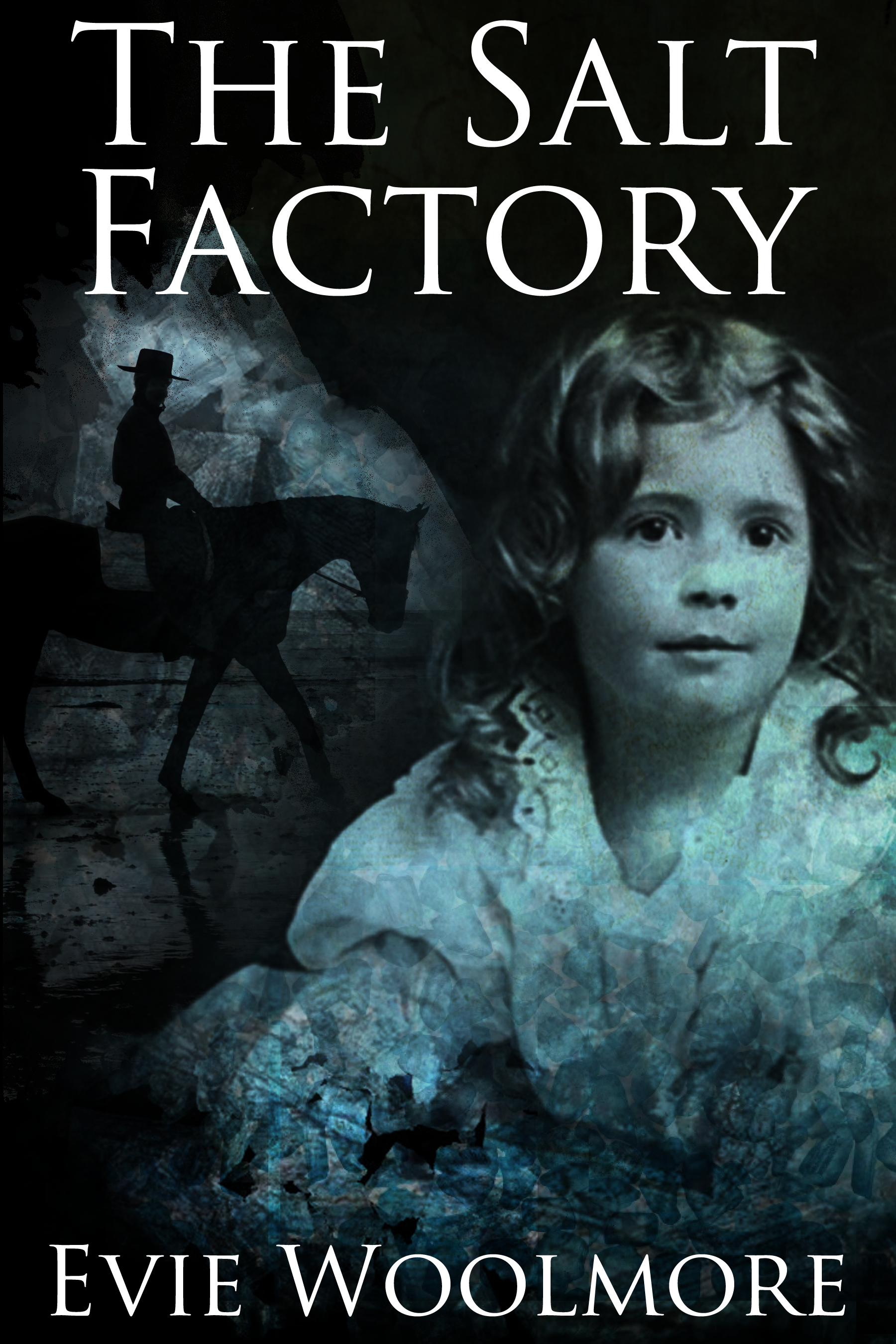
THE SALT FACTORY by Evie Woolmore (Available at all Amazon sites including Amazon UK and Amazon US)

salty9_option

‘I never shoot a man unless there is no other choice.’

The motto of Thelonia Jones, deputy Marshall, makes perfect sense in the silver-mining mountains of Colorado. But back in Victorian England, hoping to settle the debts of her half-brother Cadell, Thelonia finds much that bewilders her. Why has her wealthy stepfather abandoned his mansion to die alone in a rundown cottage by the sea? Who is the strange little girl who brings seagulls and sick people back to life? And why has the owner of the Greatest Freakshow on Earth followed her halfway around the world? For all her ease around matters of life and death, even Thelonia will be surprised by just how high the stakes are about to get. They say the past always catches up with you. For Thelonia Jones, that means literally.

~

EQUILIBRIUM by Evie Woolmore (Available at all Amazon sites including Amazon UK and Amazon US)

internal_eq

“…original, poignant, illuminating…”  “a “fine yarn” where spirits, mystery and love waver …”  “…evocative writing…highly recommended…”

Epiphany and Martha are sisters with a stage mediumship act in Edwardian London. When they are asked to give a private reading at the home of Lady Adelia Lyward to find out the truth about her brother’s death, Martha must face up to her past. For two years ago, her affair with Lord Rafe Lyward ended in pregnant disgrace, and her attempted suicide in the River Thames. But there is more at stake than Martha’s anonymous return, for Epiphany bears the burden of restoring the equilibrium, not just to the Lywards but to her sister and ultimately to herself.

The Historical Novel Society review says “the story is rich in complex characters … I recommend “Equilibrium” to readers who enjoy historical fiction with spiritualist influences.” Equilibrium is also Awesome Indies Approved.

~

RISING UP by Evie Woolmore (Available at all Amazon sites including Amazon UK and Amazon US)

smaller_ru“…simple and beautiful, human and poignant…”   “…mystery, history and a bit of mysticism…” “….it’s one of the best books on the subject I’ve ever read…”

Tom Macindeor is an itinerant English teacher, spending the summer in Warsaw in the hope of finding out the truth about his grandfather, a Polish resistance fighter. But when he hears the voice of Ela, a young woman trapped in the Jewish Ghetto of 1942, a window opens not just on his past but the future of the ghetto and all those who live in it. Should he share what he knows of their fate, or will Ela’s search for the truth about her own family doom them both?

****

If you yearn to be a teenager again – or are one still – try Flora Chase‘s luxurious young adult historical saga:

THE STRATTONS by Flora Chase (Available at all Amazon sites including Amazon UK and Amazon US)

The Strattons vol 1 cover

The Strattons, the first volume of The Strattons young adult historical saga, is set against the backdrop of the luxurious late Edwardian era, on the eve of the First World War. Four young people, aristocrats and servant, are about to find their safe, comfortable world changed forever. Each must come to terms with the expectations of their class, their gender, and their destiny, and decide whether to embrace them or find the courage to fight against them.

When their diplomat father, the 4th Marquess of Stratton, is killed in Germany, Freddie, Julia and Blanche Matchingham, and their housemaid Dinah, find their world changed forever. Freddie must abandon dreams of university to become the 5th Marquess. Julia is wrenched from the contented obscurity of her books to face the nosy aristocracy keen to marry off her brother. Shallow, sociable Blanche finds her ambitions to take London by storm thwarted by mourning and social restriction. And why is Dinah, the first housemaid, suddenly being sent away from Stratton? The arrival of a German prince and a factory worker will turn all their worlds upside down and each of them must decide what their future holds, and whether they have the courage to face it.

****

Finally, if you like a contemporary satire with a dark side, look no further than CRASH COLE IN ‘THE RAKE SPARED’ by Cadell Blackstock (Available at all Amazon sites including Amazon UK and Amazon US)

Crash Cole in 'The Rake Spared' cover

This is a scandalous tale with a supernatural twist. If you like your heroes to be decent honourable men, then look away now.

Crash Cole’s fans love him enough to literally keep him alive. But who hated him enough to want him dead? Just like Don Juan before him, celebrity TV biker Crash Cole finds himself at the gates of hell as a consequence of his dissolute and promiscuous lifestyle. Except this hell is of his own making. Hauled back from the brink of death by the unfettered love of his fans, Crash can now hear every one of their voices inside his head, a chaotic din that obscures his memory of how he nearly died in the first place. Learning to live with it proves more than Crash can bear, and with his body mending at a phenomenal rate due to the healing love of his fans, he goes on the run, aided by Julia, a nurse with a bit of a crush on Crash.

Virtually unrecognisable due to terrible scars on his face, Crash revisits his life and the accident, a voyage of discovery constantly overshadowed by the thoughts of those who wished him live and the silence of those who didn’t. But will he learn the truth before his fate catches up with him?

Love him or hate him, you’ll want to get to know him.

Unknown's avatar

EPIC’s Ariana Cover Awards Finalist: Equilibrium

2014_arianacoversfinalistlogo  internal_eq

allonymbooks is delighted to announce that Chris Wells’ stunning cover for Evie Woolmore‘s novel Equilibrium has been shortlisted for the EPIC Ariana Cover Awards 2014 in the Spiritual category. The winners will be announced at EPICON in San Antonio, Texas in March 2014. Chris has designed several covers for allonymbooks, most recently his fabulous illustration for Broadway Murder of 1928, the first of the Lucille Landau mysteries by EJ Knight.

To find out exactly why you should judge this book by its cover, read a sample without even having to download it from Amazon. Learn more about what inspired Evie to write the book, find out about her interest in the Edwardians, and read an interview with Evie. Find out more about Evie’s other novels and see more of Chris Wells’ covers on Evie’s page.

To find out more about the EPIC awards and to see other shortlisted covers, visit the EPIC website and scroll down to see the covers at the bottom of the page. Equilibrium has been shortlisted in the Spiritual category.

Unknown's avatar

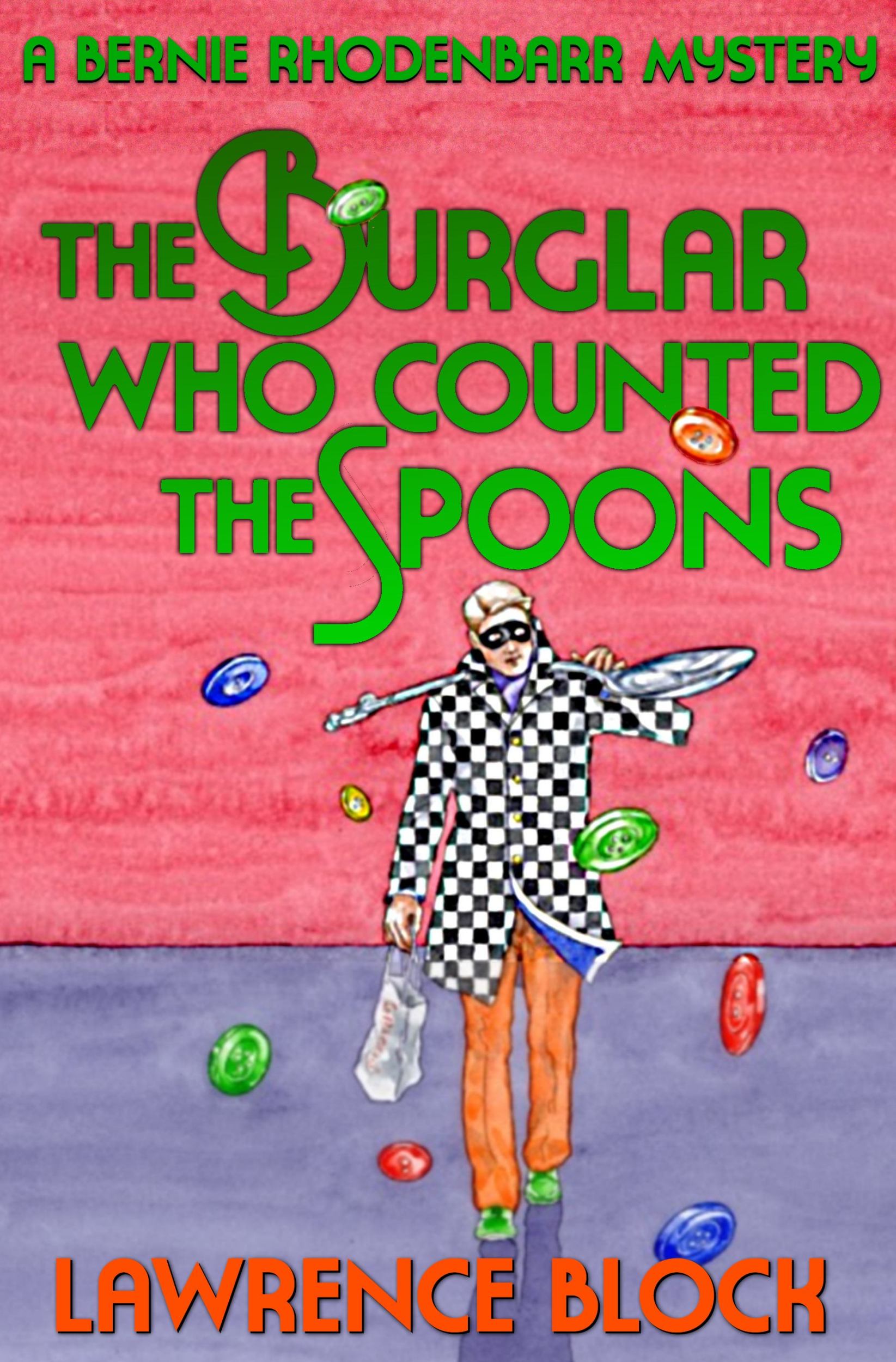
The Burglar Who Counted the Spoons by Lawrence Block: (p)Review

New York crimewriter and allonymbooks mentor Lawrence Block generously shared a preview copy of his brand new Bernie Rhodenbarr novel with allonymbooks. Here’s what we thought.

Ebook Cover SpoonsThere are probably equal parts of pleasure and pressure in creating a successful serial character, for while they can generate enormous success there must be the constant wonder of whether and when to leave them be, and the incessant clamour of fans eager for the next instalment. Lawrence Block’s novel A Drop of the Hard Stuffwas almost certainly the last of his Matt Scudder books, and it’s been so long since we last heard about the burglary and brilliance of Bernard Grimes Rhodenbarr (The Burglar on the Prowl, 2004) that many loyal readers must have wondered if he had retreated full time to Barnegat Books and a virtual retirement. So it was a delight for all when Block announced that Bernie had reappeared after several years off in a brand new full-length novel.

Bernie has been happily minding his own business at Barnegat Books, pondering (in an almost post-modern fashion) the impact of the e-book and Kindle on the traditional bookseller’s livelihood, when he is commissioned by a well-dressed stranger to commit a spate of burglaries. It starts small enough with a manuscript from a museum (delightful echoes of The Burglar who Painted like Mondrian), a task for which he enlists the help of his friend, lunch companion and conversational jousting partner Carolyn Kaiser, but the stakes are raised somewhat and a theme begins to emerge. Bernie is not without conscience, but his thieving must have elegance, purpose, and an educational context too. So when his old foe and foil Ray Kirschmann asks him for advice about a peculiar death and burglary in which he cannot possibly have been involved, but which seems to have no elegance and no purpose, his interest is piqued and Bernie begins to investigate. His reputation and freedom are not on the line as they are in his earlier escapades, but it seems his moral core is disturbed: perhaps it is the girl who found a book in his store and then bought its e-book counterpart on Amazon, perhaps it is her friend whose one-night stand has discombobulated him, or perhaps it is Bernie’s sense that the line between collecting and greed has grown thin.LB photo

The book has all the hallmarks of classic Bernie: fluent, hilarious dialogue, the admiration of artistic, cultural and literary worth, the ever-presence of New York City, Carolyn’s intermittently successful love-life, the culinary adventures of their daily lunch, and of course the puzzle of who is the murderer and why. It has also the hallmark of a man who is enjoying writing more than ever, and perhaps at times it is faintly self-indulgent as Bernie and Carolyn burble on cheerfully to each other more extensively than usual, and the history lesson is a little longer than in other novels. But there is much joy to be found in a reading a book which has so conspicuously brought its writer such pleasure, and if there was pressure to produce another Bernie story, it doesn’t show. Block has taken seemingly effortless advantage of what direct publishing has offered in writing a story and publishing it, and while a print publisher would have been reassured that they were getting what they always have, the reader does not have to wait eternal months for an editor to discover what Block surely knew: that the Burglar had never really left.

You can find links to buy the book at LB’s Blog and Website and follow him on Twitter: @LawrenceBlock