Unknown's avatar

Interview with Zoe Brooks, magic realist writer and reviewer

This week, allonymbooks novelist Evie Woolmore interviews author Zoe Brooks about their mutual interest in magic realism and Zoe’s project to read widely in the genre.
Evie Woolmore: Zoe, you explain on your blog that you started reviewing magic realist books because people told you that’s what you wrote. What qualities were you attributing to your own fiction when you started writing that you now identify as being magic realist?
Zoe Brooks: The Healer’s Shadow trilogy books and Mother of Wolves are all set in a non-specific world, which could be our world but isn’t. The world is very realistic – influenced by my study of history and my travels – and so it is unlike the incredible fantasy worlds of most fantasy books. Looking back I realize I was influenced by One Hundred Years of Solitude, in which Marquez creates the town of Macado, in an unspecified country which could be somewhere in South America but isn’t.  The world of my books isn’t full of spells or magic, but there are Shadows.  The heroine of the trilogy, Judith, is born with a Shadow. Shadows appear to be human but aren’t in some ways. Through the course of the trilogy, Judith and the reader understand more and more about what Shadows are. 
 
Most magic realism is about two cultures meeting – often a western realist culture and an indigenous culture which believes in magic. The trilogy is partly about the clash between the new university-based medical doctors and traditional healers, such as Judith. In The Company of Shadows, the final book in the trilogy, Judith completes her training as a healer. As a result what might be called “magic” appears, but then it depends how you look at it. I think this ambiguity is a common feature of magic realism. 
EW: Yes, I agree that ambiguity and a clash of cultures are something I would certainly identify as being magic realist. How useful do you think ambiguity is as a creative tool for a writer?
ZB: It’s a very useful tool. It is also true to life – life is ambiguous. If you are using a first-person narrator I would say ambiguity is a necessity, as your central character can’t be certain of everything.
Ambiguity can be used to keep the reader turning the pages: what’s going on here? But whether you can still have ambiguity at the end of the book is another matter.  Some people want everything wound up and explained at the end. In magic realism that doesn’t always happen – sometimes the magic is just part of the world and isn’t explained, other times the reader cannot be clear if the magic was actually in the head of one of the characters. Personally I am quite okay about that when I read a book that ends in this way, but other people aren’t. In the case of The Healer’s Shadow trilogy, the last book answers a lot of people’s questions.
EW: What unexpected surprises did you discover among the books you read and reviewed, in terms of new authors, books you weren’t expecting to enjoy, or clever uses of magic realism?
ZB: What a question! I’ve read over ninety books for the magic realism blog, so where do I start? Of the classic magic realist books the one that blew me away was Pedro Paramo. It’s poetic, experimental and just wonderful. Previously I had read very few short story collections, but magic realism works well in short stories. Moscow But Dreaming by Ekaterina Sedia has to be one of my favourite books so far and Diving Belles by Lucy Wood is a lovely evocation of the magic of Cornwall. In terms of clever uses of magic realism I suppose the use of magic realism in Graham Joyce’s psychological suspense novel The Tooth Fairy was an eye opener for me as a writer and has influenced the book I am currently working on. I had not experienced Chicano literature before and I loved the historical biography The Hummingbird’s Daughter by Luis Alberto Urrea. Hardly a surprise as it’s about a traditional woman healer, which is also the focus of my Shadows trilogy.
 

EW: I too very much enjoyed Lucy Wood’s Diving Belles, and it reminded me of how different the narrative drive is in short stories. You mentioned the influence of The Tooth Fairy, so I’m curious what else you have learned about your own writing of magic realism from reading so widely in the genre?

ZB: I don’t subscribe to a view that magic realism is a form of escapism. I have just finished Burning Angel by James Lee Burke, which is a gritty detective story with an element of magic realism. Your book can be very real and also magical. The more I read the more I see magic realism as a way of exploring reality in its totality. I’ve always tackled hard issues in my books – The Healer’s Shadow trilogy is about overcoming prejudice and persecution. I believe magic realism can allow you do this in a deeper way.

EW: So, can you share with us what you are writing at the moment?

ZB: My current work in progress is set in modern Prague. It’s a place I know very well, as I spend half my time in the Czech Republic. Prague may be a bustling modern city, but it is also one where almost uniquely you are aware of a magic reality alongside the normal world. I am always surprised how many Czechs believe in angels, devils and nature spirits. The novel is a psychological suspense. A young British woman has gone missing. As we meet people who knew her and read her letters and journal, we find ourselves in a shifting world of reality. In a fortnight I will be flying off to the Czech Republic again, where I will be finishing off the first draft of the book. 

Zoe, it’s been a real pleasure talking to you about magic realism. Thank you very much for sharing your thoughts.

You can find out more about Zoe, her novels and her magic realism blog at her website. You can find out more about Evie Woolmore’s magic realism novels here at allonymbooks, and read Evie’s review of Zoe’s first Healer’s Shadow novel here.


Unknown's avatar

Indie Book Reviews (12): British Indie Authors (3)

This week, allonymbooks author Evie Woolmore reviews Alan Williams’ novel The Blackheath Seance Parlour (available from Amazon)

My own interest as a writer in the spiritualist world of the Victorian and Edwardian eras drew me to this novel, but if you are looking for a good historical novel with plenty of authentic detail then there is much to appeal here. Middle-aged sisters Judy and Maggie Cloak have inherited a shop in the windswept, weather-beaten village of Blackheath on the outskirts of east London, but it is doing badly in its current incarnation as a sweetshop and the Cloak sisters are getting desperate. Judy has ambitions to escape both literally and metaphorically through a gothic novel she is writing, while Maggie seeks solace in drink from her sense of abandonment as a daughter and a prospective wife. Their lives change with the arrival of the rather mysterious Mrs Walters, a woman of some spiritual ability, who soon helps the sisters transform the shop into a focal point for many contrasting things: gossip, hope, faith, belief, mystery, and all the trappings of the occult. But the initial success of tea leaf reading is not enough for Maggie, Judy or Mrs Walters, and the story explores how the paths of each woman diverge as they seek their own resolutions with the past and the future. The novel is also intercut with long extracts from Judy’s novel, through which she explores certain aspects of her own reality and the society to which she imagines belonging.

The other main character in this book is the village of Blackheath, and Williams notes at the end of the book that he wanted to do justice to the community and its history as part of his aim in writing the novel. He captures very effectively the bleakness of the heath as it must have been in the Victorian era, and with a subplot around the murder of two girls, he infuses a certain chill in the already atmospheric spiritualist action. He has also done great justice to what must have been substantial research of spiritualism in the Victorian era. In the scenes where the sisters and Mrs Walters are reading tea leaves and the glass ball, and later the seances themselves, he has drawn very authentically on reports of the time, both of the fake and the genuine, and that level of accuracy will please readers of historical fiction and those interested in spiritualism.

It’s interesting too that he has essentially focussed on three middle-aged women, and he explores the social confinement these women must have felt in being unmarried while also seeking to be independent. Each woman is seeking something different as a consequence, and while their stories are interesting I wasn’t always as convinced by the historical authenticity of their actions and particularly some of their dialogue. Without giving too much away about how the story develops, some more spiritually-inclined readers might think it a shame that the most talented character spiritually was also the least attractive personality. It also might be seen by some readers as not doing much for a feminist agenda: the social emancipation and independence each of these women is seeking is in a way undermined by the lengths they go to to achieve what they want, and in some ways none of the women comes out of it very well. I was also a bit disappointed by the way Mrs Walters’ storyline resolved itself and not entirely satisfied with what happens to Maggie. But to discuss that at any length would be to spoil it for those who haven’t read the book.

As in my own spiritualist novels (search for Evie Woolmore), there is some discussion about the science vs religious faith vs spirituality conundrum, and this appears in the last part of the book only. It would have been interesting to do more with this much earlier in Maggie’s arguments with Father Legge, although it makes a very fitting climax dramatically in other respects. The book – though quite long – is generally well-paced, although I personally didn’t engage as much with the extracts of Judy’s novel. I think there could have been fewer of them and shorter ones too, without detracting from the part they played in reflecting some of the real-life action and the issues that arise for Judy as a consequence of writing the book.

This is a historically detailed novel, which I’m sure residents and those familiar with Blackheath will much enjoy for its local portrait, and which will provide a good escape on a wintry evening or two.

*****

Evie Woolmore is the author of historical novels with a spiritual twist. If you enjoyed The Blackheath Seance Parlour, you will probably enjoy her novel Equilibrium too, available at Amazon.

Unknown's avatar

Indie Book Review (11)

This week, allonymbooks novelist Evie Woolmore reviews The Written by Ben Galley, founder of Libiro.

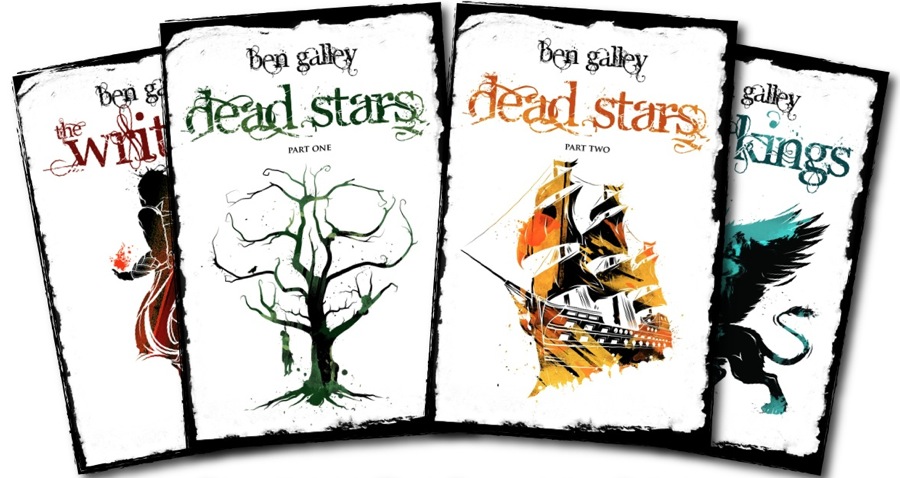
I’ll say up front that I don’t read a lot of fantasy, but I loved the idea of what is written being such an important part of this story, and that was what attracted me to it – that, and the stunning cover design. So I’m delighted to say that this is a well-crafted, imaginatively constructed story that is very readable, regardless of whether you read a lot of fantasy or this is your first foray into the genre. It’s also the first in a series, which seems almost essential when writing fantasy, but will also please readers who have been quickly swept off their feet by this story.

A valuable item has been stolen, and its theft has brought a realm to the brink of war. Old enmities are being revived, and trust must be rebuilt between enemies if a far greater threat is to be overcome. But will time run out, and will the power of our hero be enough? This might seem like the plot to many a fantasy novel at the most general level, but Ben Galley has done a nice job of finessing the story with some lovely, well-imagined details. Farden, our hero (though not an enormously likeable one, perhaps) is a complicated fellow, driven yet a little lost, isolated and feared, yet inspiring fondness in his closest confidantes and strangers alike. He is also torn on the inside by a weakness that could literally render him powerless. His well-drawn vampyre adviser Durnus is very strongly characterised, as are the wonderful dragons Farden meets with their Siren riders, who are also beautifully described. I have the faint sense that Galley likes some of his characters more than others – I was less convinced by the drawing of a couple of them who I won’t name because I don’t want to hint at a spoiler – but the world of Emaneska, the towns, the huge buildings in which the most important action happens are all inspiringly drawn and will not disappoint any reader.

There’s a lot of action in this book – the fighting at which Farden is so proficient, and the use of magick (though less than I was expecting actually) – and also a lot of politics too, for this is at some levels a very political novel. It is about allegiances and loyalty, corruption and manipulation, weakness and strength. The first key revelation about two thirds of the way through was perhaps not as surprising as it could have been though, and I felt for a moment as if I was watching an episode of a US crime drama, because I was running out of possible candidates for the villain. However, this is a series, not an episode, and it is always a challenge to keep the momentum going well enough not only through this book but through those that follow. I agree with other reviewers who have pointed out Galley’s potential as a novelist, and what I think is admirable (perhaps because I don’t read a lot of fantasy) is that he has not created an over-complicated world, littered by its own creative profusion. There are not so many characters, races, languages, mythologies and so on that one cannot keep them all to mind if you put the book down for a day or two, and I don’t intend it as a weakness when I say that at its heart this is quite a straightforward tale.

If I have one particular criticism it is that the narrative writing can be very dense at times. Having a solitary hero, and seeing so much of the world through his eyes, means that narrative writing outweighs the quantity of dialogue by quite a bit and it can make the novel feel rather one-paced in places. To some extent this is a feature of the genre, but for this reader, a bit more variety of pacing and more dialogue in general would have elevated this novel beyond being what is already a very good book.

Unknown's avatar

Review of Rising Up in Spiritual Wisdom Magazine

smaller_ruNice review of Evie Woolmore‘s novel Rising Up by Kathryn White of Spiritual Wisdom Magazine. Thanks, Kathryn!

Unknown's avatar

Escape the chaos of Christmas: relax with a book!

Christmas is a vibrant, social time of year. But sometimes you just want to curl up quietly in a corner to recover from all that food (and drink!), and read a book. While you’re buying gifts for all your friends and family, why not treat yourself to one of the allonymbooks novels this year: high quality fiction at utterly affordable prices! From mystery to masculine satire, and historical fiction for adults and YA, there’s something for everyone. All allonymbooks books are available for Kindle at all Amazon sites.

Thank you to all our visitors in 2013. We hope you’ve enjoyed our blogs and reviews. If you read an allonymbooks novel, do please review it on Amazon and your other favourite sites!

~

Firstly, if you’re a fan of mystery, try EJ Knight‘s new novel, Broadway Murder of 1928. (Available at all Amazon sites including Amazon UK and Amazon US).

BMv6final copy

Introducing Lucille Landau,  this is the first in a series of four novels set in New York in the Roaring Twenties. Lucille, an East End piano player with dreams of being the next Lil Hardin, has killed a man in London and marries another to escape on a boat to America. She seems to fall on her feet, finding somewhere to stay and the perfect job – playing piano for a new show by rising Broadway stars Tommy Anzonetti and Manny Wolfe. But surely Lucille can’t escape the past forever, and when actor Alfred Duff sees through her story, she’s relieved when he is murdered in his dressing room. But the police aren’t far behind, and they’ve got plans for Lucille. It couldn’t get much worse, could it? Except that Lucille is falling in love with Tommy Anzonetti and her husband keeps showing up…

****

If you like historical fiction or magical realismEvie Woolmore‘s haunting and imaginative novels will draw you in from the first page. Find out why Read Dream Relax say that Evie is “one indie author worth reading”.

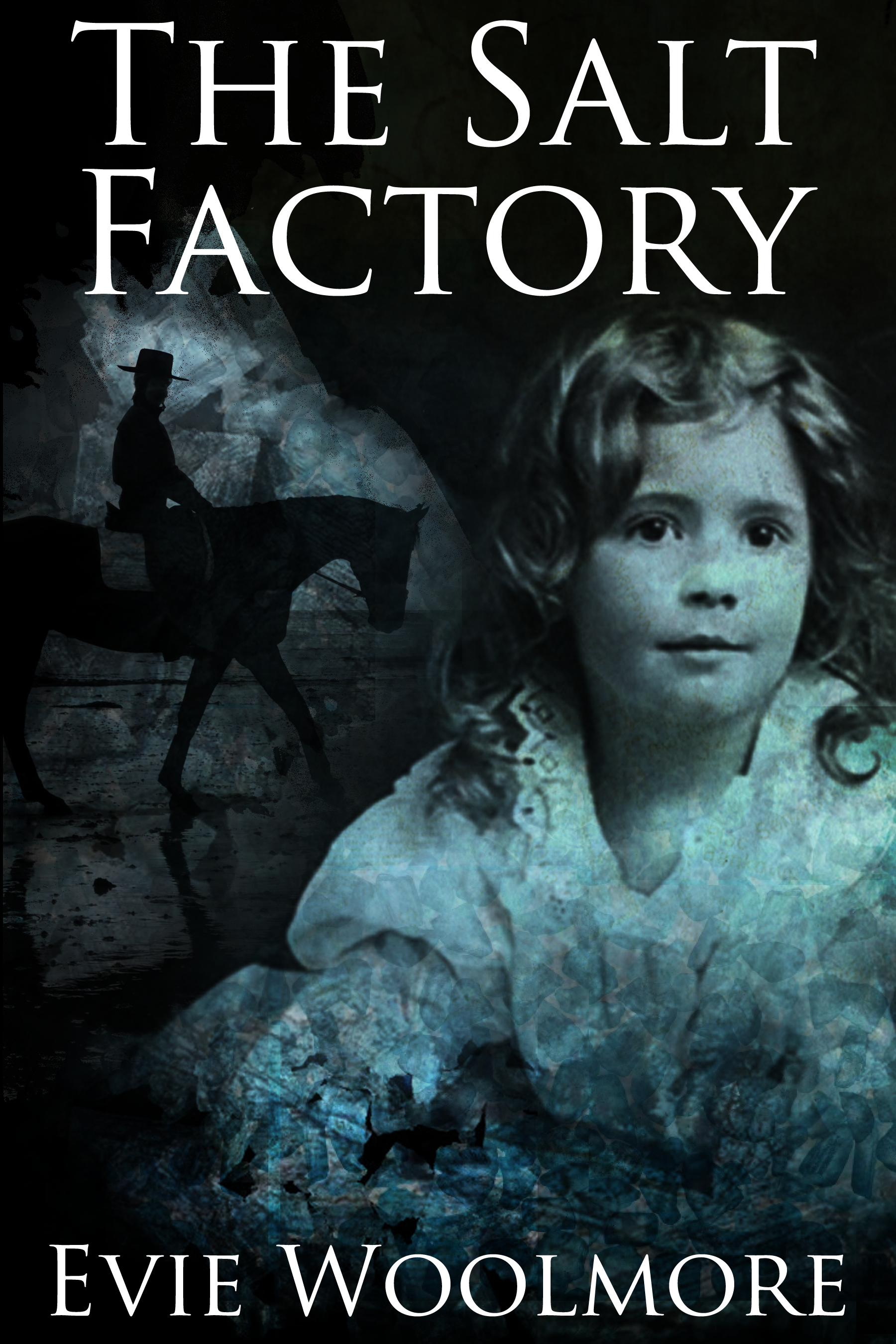
THE SALT FACTORY by Evie Woolmore (Available at all Amazon sites including Amazon UK and Amazon US)

salty9_option

‘I never shoot a man unless there is no other choice.’

The motto of Thelonia Jones, deputy Marshall, makes perfect sense in the silver-mining mountains of Colorado. But back in Victorian England, hoping to settle the debts of her half-brother Cadell, Thelonia finds much that bewilders her. Why has her wealthy stepfather abandoned his mansion to die alone in a rundown cottage by the sea? Who is the strange little girl who brings seagulls and sick people back to life? And why has the owner of the Greatest Freakshow on Earth followed her halfway around the world? For all her ease around matters of life and death, even Thelonia will be surprised by just how high the stakes are about to get. They say the past always catches up with you. For Thelonia Jones, that means literally.

~

EQUILIBRIUM by Evie Woolmore (Available at all Amazon sites including Amazon UK and Amazon US)

internal_eq

“…original, poignant, illuminating…”  “a “fine yarn” where spirits, mystery and love waver …”  “…evocative writing…highly recommended…”

Epiphany and Martha are sisters with a stage mediumship act in Edwardian London. When they are asked to give a private reading at the home of Lady Adelia Lyward to find out the truth about her brother’s death, Martha must face up to her past. For two years ago, her affair with Lord Rafe Lyward ended in pregnant disgrace, and her attempted suicide in the River Thames. But there is more at stake than Martha’s anonymous return, for Epiphany bears the burden of restoring the equilibrium, not just to the Lywards but to her sister and ultimately to herself.

The Historical Novel Society review says “the story is rich in complex characters … I recommend “Equilibrium” to readers who enjoy historical fiction with spiritualist influences.” Equilibrium is also Awesome Indies Approved.

~

RISING UP by Evie Woolmore (Available at all Amazon sites including Amazon UK and Amazon US)

smaller_ru“…simple and beautiful, human and poignant…”   “…mystery, history and a bit of mysticism…” “….it’s one of the best books on the subject I’ve ever read…”

Tom Macindeor is an itinerant English teacher, spending the summer in Warsaw in the hope of finding out the truth about his grandfather, a Polish resistance fighter. But when he hears the voice of Ela, a young woman trapped in the Jewish Ghetto of 1942, a window opens not just on his past but the future of the ghetto and all those who live in it. Should he share what he knows of their fate, or will Ela’s search for the truth about her own family doom them both?

****

If you yearn to be a teenager again – or are one still – try Flora Chase‘s luxurious young adult historical saga:

THE STRATTONS by Flora Chase (Available at all Amazon sites including Amazon UK and Amazon US)

The Strattons vol 1 cover

The Strattons, the first volume of The Strattons young adult historical saga, is set against the backdrop of the luxurious late Edwardian era, on the eve of the First World War. Four young people, aristocrats and servant, are about to find their safe, comfortable world changed forever. Each must come to terms with the expectations of their class, their gender, and their destiny, and decide whether to embrace them or find the courage to fight against them.

When their diplomat father, the 4th Marquess of Stratton, is killed in Germany, Freddie, Julia and Blanche Matchingham, and their housemaid Dinah, find their world changed forever. Freddie must abandon dreams of university to become the 5th Marquess. Julia is wrenched from the contented obscurity of her books to face the nosy aristocracy keen to marry off her brother. Shallow, sociable Blanche finds her ambitions to take London by storm thwarted by mourning and social restriction. And why is Dinah, the first housemaid, suddenly being sent away from Stratton? The arrival of a German prince and a factory worker will turn all their worlds upside down and each of them must decide what their future holds, and whether they have the courage to face it.

****

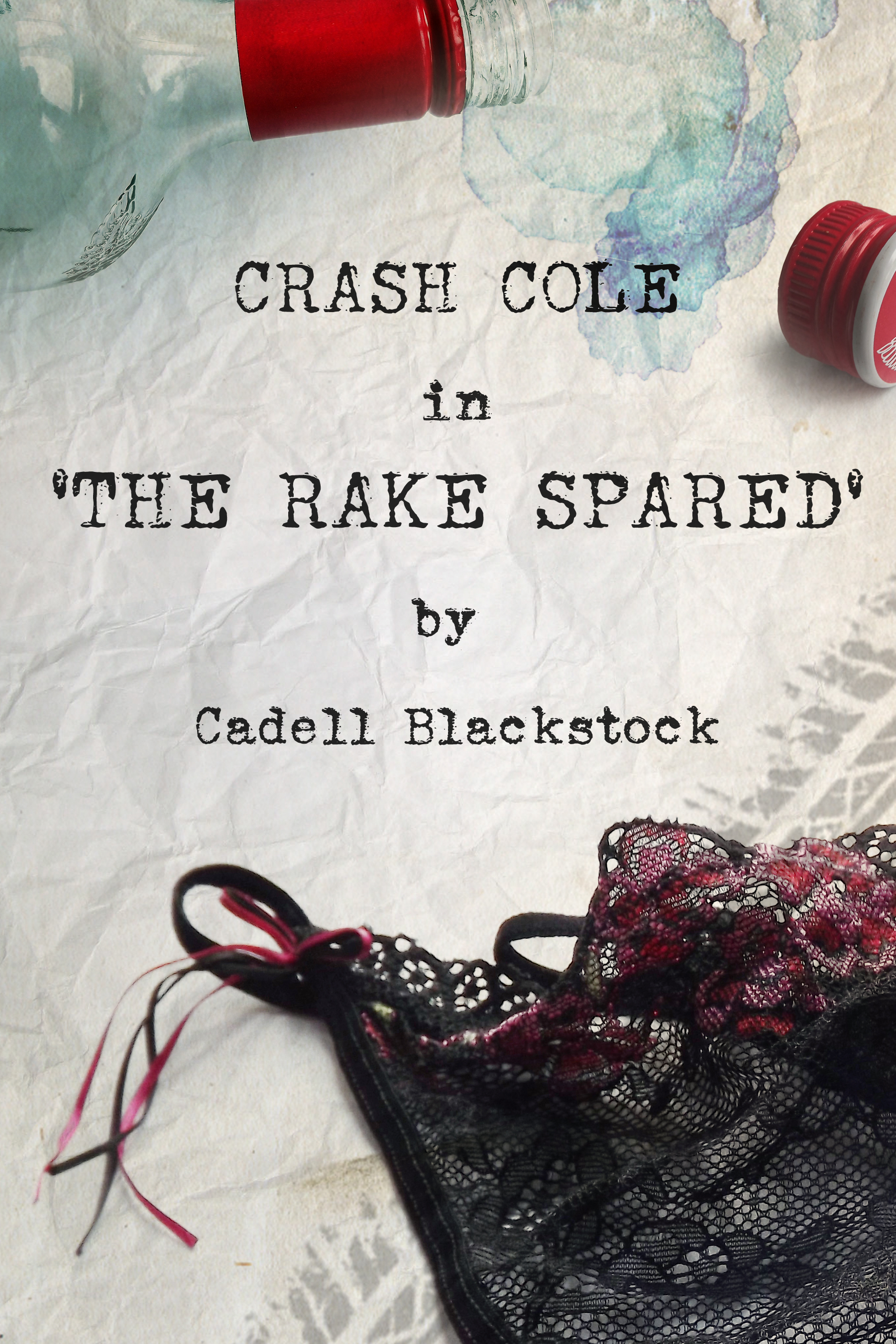
Finally, if you like a contemporary satire with a dark side, look no further than CRASH COLE IN ‘THE RAKE SPARED’ by Cadell Blackstock (Available at all Amazon sites including Amazon UK and Amazon US)

Crash Cole in 'The Rake Spared' cover

This is a scandalous tale with a supernatural twist. If you like your heroes to be decent honourable men, then look away now.

Crash Cole’s fans love him enough to literally keep him alive. But who hated him enough to want him dead? Just like Don Juan before him, celebrity TV biker Crash Cole finds himself at the gates of hell as a consequence of his dissolute and promiscuous lifestyle. Except this hell is of his own making. Hauled back from the brink of death by the unfettered love of his fans, Crash can now hear every one of their voices inside his head, a chaotic din that obscures his memory of how he nearly died in the first place. Learning to live with it proves more than Crash can bear, and with his body mending at a phenomenal rate due to the healing love of his fans, he goes on the run, aided by Julia, a nurse with a bit of a crush on Crash.

Virtually unrecognisable due to terrible scars on his face, Crash revisits his life and the accident, a voyage of discovery constantly overshadowed by the thoughts of those who wished him live and the silence of those who didn’t. But will he learn the truth before his fate catches up with him?

Love him or hate him, you’ll want to get to know him.

Unknown's avatar

EPIC’s Ariana Cover Awards Finalist: Equilibrium

2014_arianacoversfinalistlogo  internal_eq

allonymbooks is delighted to announce that Chris Wells’ stunning cover for Evie Woolmore‘s novel Equilibrium has been shortlisted for the EPIC Ariana Cover Awards 2014 in the Spiritual category. The winners will be announced at EPICON in San Antonio, Texas in March 2014. Chris has designed several covers for allonymbooks, most recently his fabulous illustration for Broadway Murder of 1928, the first of the Lucille Landau mysteries by EJ Knight.

To find out exactly why you should judge this book by its cover, read a sample without even having to download it from Amazon. Learn more about what inspired Evie to write the book, find out about her interest in the Edwardians, and read an interview with Evie. Find out more about Evie’s other novels and see more of Chris Wells’ covers on Evie’s page.

To find out more about the EPIC awards and to see other shortlisted covers, visit the EPIC website and scroll down to see the covers at the bottom of the page. Equilibrium has been shortlisted in the Spiritual category.

Unknown's avatar

Indie Book Reviews (10)

This week allonymbooks author Evie Woolmore reviews a curious journey.

My Problem with Doors by Scott Southard (Amazon UK and US)

Jacob has a problem with doors. From time to time, when he walks through one, his life changes in a flash, transporting him across time and space, interrupting the flow of a normal life with the juxtaposition of extraordinary characters and challenging experiences. Just as he gets used to one life, one period in history, just as he builds relationships that are meaningful to him, so is he snatched away by some mysterious hand of… Well, of what? Of fate? Of God?

It’s a really interesting premise for a novel, that of a wanderer through time whose destiny and purpose is uncertain. He encounters somebodies and nobodies, revealing the truth behind some of the most notorious characters in history, and the smaller but no less significant stories of every day individuals. Indeed, in some senses this is a novel of two halves. While it begins as a narrative romp through history, told by Jacob himself who is scratching out his memoirs a candle at a time, it becomes increasingly a reflective existential analysis. What is the point of all this diversity of experience if I can’t change anything about my own life, let alone anyone else’s?

And therein lies the novel’s strength and, for me, its weakness. There is a richness of imagination in Southard’s telling of Jacob’s tale, of the places he sees, the events he witnesses, the characters he meets and falls in love and in hate with, is helped and hindered by. He witnesses some extraordinary periods in history and it would be a remarkable novel if that were what it chose to focus on as story-telling and imaginative odyssey, contrasting the values, people, places, morals, the continuity of human emotion and experience and the differences. And there is some fine, well-constructed story-telling, particularly the sections featuring the Shelleys and Byron, though less so those with Jack the Ripper. There are though some contrivances around Jacob’s increasing desire to explain why he is enduring this journey, including his desire to change the course of one particular event in recent American history which feels a little unnatural in the course of the novel. There are so many events in the history of the nation, and given that we are never really sure of Jacob’s nationality for he is not explicitly, patriotically American but rather a citizen of time and space, why does he choose to focus on that event rather than the Holocaust, for example, as a means of finding out whether his ability to move in time could change the course of history?

There is a love story too at the centre of this, and perhaps it is the most compelling theme in the novel, for it is this aspect of his life which transforms Jacob and changes him from a travelling storyteller into a journeyman of a different kind. Yet perhaps, like Jacob, we too end up with more questions than answers. I found myself wondering why Southard had chosen the events he had for Jacob’s story, why those famous historical people, why I felt dragged in and out of the story, sometimes utterly absorbed and sometimes jerkily aware of the story’s construction in equal measure. This is such an original idea for a novel which is at times really well executed but which at other times left me frustrated and wishing for more fulfilled potential.

Unknown's avatar

Interview with Ben Galley, author and founder of Libiro

This week, British indie author Ben Galley talks to allonymbooks novelist Evie Woolmore about his writing and his brand new e-book distribution website, Libiro.IMG_1824s

Ben, you’ve had a busy year, releasing two books and launching an e-book store among your galaxy of other activities. We’ll talk about Libiro in a minute, but I’m interested in how and why you settled your first published novels in epic fantasy, a very strong genre in indie publishing.

I think you’ve hit the nail on the head there. Fantasy in general is seeing a huge surge in popularity, and publishers are responding in kind. Both indies and traditionals are churning out great fantasy books like there’s no tomorrow, and the readers are inhaling them at an equal rate. It’s an exciting time, especially now that we can all chat to each other and share great reads so easily via Twitter and Facebook.

Another reason I chose to write and publish fantasy is that I’ve always loved it as a genre. Ever since I was a kid I’ve always had my nose buried in a book, drinking in mythology and the wildest dreams of Tolkien, CS Lewis, Gaiman, or of Robin Hobb. It is fantasy’s limitless nature, that I admire – how each author can spill their imagination onto a page, and experiment without worrying whether they’re thinking too far outside the box. That’s why I like it, and why I like writing it too. It’s gives you a wonderful sense of satisfaction, when you realise you can get away with writing about minotaurs, and goblins, or shadows and magic. The stuff we all pretend is real when we’re young.

Promo 2013 BannerSo what do you think indie publishing offers fantasy writers that perhaps traditional publishing doesn’t? As an author of magical realism myself, I like indie publishing because I don’t have an editor or a marketing team saying ‘I can’t pigeonhole that, it’s too original to be sellable.’ To what extent does that argument apply for fantasy genres?

I think pigeon-holing happens across all genres, and all publishers are somewhat guilty of it. It’s a natural thing to do, after all, when you’re funding a debut book with your own money – you want to make sure it sits nicely inside a genre, so that it sells, and sells well. If it’s a little too out there, and has even the slimmest chance of taking a commercial nosedive, then there’s a risk you might lose the money you’ve put it into it. But indies don’t have this problem! Our publishing costs are much, much lower than that of a publishing house. Also, thanks to the big reading boom, there are a lot more readers exploring the niches of popular fiction. Fantasy fans are doing this en masse. There’s just something about fantasy and sci-fi fans. They put the fan in fanatical. All this is great news for us indies – we can publish books that push the boundaries, and actually sell them too.

What have been the best and worst bits for you about indie publishing your own work?

 That’s a good question! There are so many good bits. Taking the reins with both hands gives you an enormous sense of accomplishment when progress is made. After all, it’s all down to you, and so you deserve to be pleased and proud when a great review comes in, or when a bit of fan mail pops into your inbox, or when you glimpse the last months’ sales figures.

One of my proudest moments will always be walking into a Waterstones, and spying my book sandwiched between the likes of Neil Gaiman and David Gemmell. And I didn’t even put it there! The store had taken a chance, based on its cover, and I later learnt they were selling very well. It’s at those moments that you can’t help but grin like a halfwit. You suddenly realise it’s all been worth the hard work.

There are down-sides, of course, as there are to most things. Self-publishing can be difficult at times, primarily because there are days when it feels like you’re not going anywhere, but trying everything. It can be hard when you’re faced with doing everything yourself, and in those times, all you have to do is remember what you’ve achieved already, and the pros of the self-publishing path. Keeping those at the forefront of your mind will always help.

Logo_f_LargeSo, given that you have had success in bookshops with printed versions of your books, what led you to set up Libiro? What are you offering the indie writer – and the reader – that other e-book distributors don’t?

What led me to set up Libiro was my own experience in the digital world. I’ve had success in both the print world and the eBook world, but each has their downsides for us indie authors. For instance, in the print world it can be difficult to get major bookstore chains to take your book. With eBooks, however, getting your book into a store isn’t difficult but standing out amongst the crowd can be, especially at vast stores like Amazon and Kobo. They’re great providers and very author-centric, but it can still be tricky. Another thing we indies face is the self-publishing stigma – the belief that just because a book is self-published it is automatically of a lower quality than a traditionally published book. These are the issues my co-founder Teague Fullick and I wanted to tackle.

By making Libiro exclusive to indies, we can help fellow authors stand out, as well as showcase their talents to the world. We also offer a great 80% royalty to all authors, regardless of price, genre, or book! For readers, Libiro offers an exciting store where you can find the newest and most exciting indie fiction. If readers have never tried an indie book before, then Libiro gives you the chance to do so!
Ben, thanks so much for taking a few minutes to talk to me. I wish you the very best with Libiroallonymbooks author Flora Chase has already put her YA historical novel The Strattons on the site and it will be fun to see how it goes.
You can find out more about Ben Galley at his website.
Unknown's avatar

Facts and Imagination: Evie Woolmore and Jane Davis discuss writing historical fiction

This week, allonymbooks author Evie Woolmore interviews Daily Mail award-winning novelist Jane Davis, whose novel These Fragile Things she recently reviewed.

“…I’ve never seen the point in historical drama. Or historical fiction for that matter. I once thought about writing a novel of that kind, but then I began to wonder, what possible patience could the public have for a young man arrogant enough to believe he has anything new to say about an epoch with which his only acquaintance is flipping listlessly through history books on train journeys?” (The Teleportation Accident by Ned Beauman)
Evie Woolmore: When we were chatting about doing this interview, Jane, you said this quote had caught your eye.
Jane Davis: I should probably start my answer by explaining that Beauman has one of his characters speak the words, and all too soon it becomes plain that they are spoken precisely because his novel is historical fiction with a twist. He is giving himself licence to play with the theme. The blurb describes The Teleportation Accident as ‘historical fiction that doesn’t know what year it is’. That said, one of the things he acheives so successfully is that his characters are very modern, as they would have been, and are obsessed by all of the same things that plague us – one whose obsession while the Nazi party is growing is not political uprising but whether he will ever have sex again, for example – which provides an instant connection.
To some, the idea of writing any novel may seem like a fairly arrogant and self-indulgent idea to entertain. In an age when we are told that life expectancy will increase to 100, and fiction is classified as ‘historicial’ if the setting is over 30 years ago, we can all expect to dabble with history in our characters’ back stories. Since we’ll find their motivation there, it can’t be ignored. My intention when writing I Stopped Time was to pay tribute to men and women (like my grandmother, who lived to the age of 99), who experienced an enormous period of change. I could have done so by simply reading a history book (although my preference would always be a biography), but I chose to do both. It’s said that reading novels allows a person to live thousands of lives. The same can be said of authors. To explore a period of history through one character – or perhaps a small cast – brings history down to a very personal level, making it easier to digest. For me, reading non-fiction can be a passive experience. When I am writing, I am actually inside the story. Through my characters, I have to confront sights and sounds and react to them in the moment. In that sense, unless you are writing comedy, I don’t think it is possible to take historical fiction ‘lightly’. I’m afraid to say that I found The Hundred Year Old Man Who Climbed Out of the Window, which was intended to be comedy, deeply offensive. Recent history is too raw and sensitive to be messed with.
EW: That’s an interesting point about recent history. Two reviews of my novel Rising Up reflected in different ways on the challenges of writing about the Holocaust: the novel is set simultaneously in the present and in the Warsaw Ghetto of 1942. While I had not intended to write ‘a Holocaust’ novel as such, the book does explore how our knowledge of the past might affect us were we actually to engage with the past. The city of Warsaw presents us with that question all the time. So should the present day character Tom tell the Ghetto character Ela what he knows of the fate of the Jewish people or not?

JD: Reviewers’ reactions to novels is always very interesting. One review described I Stopped Time as a feminist novel. I have yet to read Rising Up but can imagine that Tom’s dilemma provides a very interesting conflict.
EW: How do you perceive the temptation to superimpose our own contemporary values on historical fiction? It’s an issue that has reared its head again very recently with verbal anachronisms being spotted in Downton Abbey.
JD: I watched my first episode of Downton Abbey last week, not because I wanted to, but because my father-in-law assumed that I would have been tuned in from the beginning. No matter how many times I insisted that I didn’t usually watch it, he was equally keen to ensure that no-one spoke during ‘Jane’s programme’. That said, I do appreciate the difficulty of striking a balance between getting the ‘feel’ of the language right and borrowing directly from the language of the day. Ripper Street is another example of televised crime drama with a historical setting where it might be argued that the language was not absolutely authentic. I have to say that I particularly liked how one of your characters in Equilibrium exclaimed, ‘Mrs Keppel’s knickers.’ The knickers reference probably sounds far more risqué now than it was at the time. I have just found the extraordinary line: ‘Richer than the Keppel girls, Bertie was their godfather and their knickers were edged with lace,’ quite a leap in terms of subject-matter!
Taking the mid-twenties as an example, there were trends of speech – such as ‘sick-making’ – among the Bright Young Things that would just sound wrong to today’s ears. I have encountered the same difficulty writing accurate dialogue for contemporary teenagers. If you were include use of the word ‘like’ as often as it actually makes an appearance, all sense of meaning would be lost.
The issue of dialogue is one thing, but changing values is another. Here, an early editorial review of I Stopped Time criticised the apparent ease with which my main character deserted her young son. ‘Part of the problem, I know, is different mindsets. Today, we feel that a mother should always put her child above a husband or partner. A hundred years ago, children were seen as being relatively less important, and society structures and viewpoints placed the woman’s role as being with her husband – this is reflected in the fact that Lottie feels excluded from the raising of her child. I’m not suggesting that you traduce historical truth, but the whole thing should be much more of a crisis in which we in the twenty-first century can feel Lottie’s terrible suffering.’ In Equilibrium, one of your characters faces as similar dilemma, handing her child over to someone else when she knows that she cannot take care of her. It is not that I don’t understand how a nineteenth or twentieth century mother might seem ‘cold’ by today’s standards, but I do feel that writers have a duty to provide an insight into how things were and to illustrate how rapidly attitudes have changed. I recently found a picture on a historical photographic board on Pinterest of a Brooklyn mother who had put three of her children up for sale during the 1930’s depression. Far from receiving criticism, she was applauded for her practical solution of how to feed the other five. No-one felt the need to ask if her decision was heart-breaking. It had to be done. And presumably she had been forced to choose which of the eight to sell – the eldest, I’d imagine.

EW: And isn’t it interesting that the picture makes us do the work in thinking about the subject’s experience and probably makes us understand it more directly, whereas in a novel we have done that work for the reader, often only to be told that we’ve got it wrong, that we weren’t being realistic!
JD: Have you had a similar experience of having being asked to make a character’s decisions more understandable to a modern reader and, if so, what was your reaction?

EW: Not exactly, but it is the central dilemma of my novel Rising Up, in that because Tom and Ela are in different times, Tom (in particular) must decide that for himself. Are the actions taken by Ela and her sisters understandable to him in absolute early C21st terms of right and wrong, or are they understandable because he is applying the filter of hindsight? He must decide not only how much of Ela’s possible future he can or should share with her, but also how to respond when she begins to reveal how strikingly different her sisters’ behaviour is. Without giving too much away, her sisters have very different experiences of the Jewish Ghetto and the Nazi occupation of Warsaw, but even then, all is not what it seems. I think in a way – without necessarily intending to – I was writing about how difficult it is to understand the past without judging it – just as you describe in the photograph of the Brooklyn mother.
A criticism I have heard of Tom is that he is too passive and too focused on his own goal of finding out what happened to his grandfather. But that narrow-mindedness is an expression of his paralysis about the enormous burden the past can put upon us, that same paralysis that perhaps we have as writers of historical fiction at times, in how best to revisit and re-express the past. Is it possible for us to write a story that meets the demands of the way we read as sophisticated, worldy-wise C21st century citizens, while also doing justice to the fact that the values, attitudes and behaviour of the past are different? Are those two reconcilable? Does historical fiction require a different kind of reading mindset? I have wondered for a while if there are perhaps broadly three kinds of ‘historical novelists’: those who write in order to accurately reconstruct history in fictional or quasi fictional terms (Philippa Gregory or Hilary Mantel); those who write stories whose plot is reliant on and infused with the historical setting and thus which are historically very precise and well-researched (such as Harriet Steel’s novel Salvation, which I recently reviewed); and those (like me) who write novels which are not principally historical but work effectively in historical settings. Do you share that view?
JD: I think that is a fair breakdown, and, like your novels, I Stopped Time falls into the latter category. That said, I don’t think that readers or publishers are nearly so analytical. Hilary Mantel has raised the game for anyone writing in the broad historical genre. Her masterstroke in Wolf Hall was focusing on Cromwell, who was once hailed a hero but has been demonised by more recent historians, and humanising him again by starting with a scene in which his father beats him to a pulp and then showing the reader his love for his wife. Philippa Gregory is a historian who has chosen fiction as the medium through which she will make it more accessible, in particular to women, whose lives she concentrates on and who are so often left out of the history books.
The expectation once a story is given a historical setting is that the author will have researched that era thoroughly. You might think that going back further in time would give the author more licence, but readers are now so well-informed that there is no such thing as ‘getting away with it.’ I was very pleased to receive a book review from a historian who said that the historical detail in I Stopped Time was accurate, without being overpowering or slowing down the plot. I see that your review of Harriet Steel’s novel Salvation talks about the reader being overloaded with historical information at times. The real challenge is how to transport the reader to another time and place without doing this. So how much detail is too much?
EW: Perhaps it’s not a question of how much is too much, but rather how much is useful and how much is identifiable by the reader? I agree that readers are now better informed or can at least check out information more easily, but my concern is about giving them information that they can’t use or doesn’t enhance their imaginative interpretation. A writer I find challenging from that point of view is Nicola Upson, whose historical crime novels use the novelist Josephine Tey as their central character. The plotlines are always interesting and well-crafted but at times I feel overwhelmed by the authenticity, for the novels feel absolutely jammed with more detail than I feel I can process as a reader. I feel as if I am made too aware of the research, too aware of the historical markers as I read. And maybe this is the central conundrum of historical fiction: in our lives we don’t take as much notice of the signs which mark our world for the age it is, but when writers craft historical fiction, they seem to put in more detail than the average person would take notice of as they live their daily lives. What happens if a detail I’m given doesn’t mean anything to me, if I can’t use it to enhance my experience of the novel? I don’t read much futuristic science fiction, but I wonder if it is a similar conundrum there: how much detail do you need to make it feel authentic without slowing things down and cluttering the reader’s experience?
JD: Returning to the most recent ‘historical’ fiction I have read, what I particularly liked about the central character in Ned Beauman’s The Teleportation Accident was his complete lack of political awareness. Although Egon Loeser’s unswerving obsession over when he last had sex is an extreme example of self-absorption, happening as the action does in Germany in the 1930s. It is very interesting how the reader’s knowledge of the era is largely assumed and how the author uses this to his advantage. Although I hope that I am a little more aware than Loeser about what is happening in the world, I find it very interesting to look back at a decade I have lived through and think about what I now consider the most pivotal events were and how all of the pieces of the jigsaw fit together. You simply don’t see them at the time, at least not with a God’s eye view. With historical fiction, the benefit of hindsight that the reader brings to the book informs the way that the central character is judged. In the case of Loeser, Beauman’s skill is that, despite his many flaws, he remains likable. Rather than a simple obsession with lust, Loeser has convinced himself that he is in love, and the pursuit of love to the exclusion of all other activities somehow seems noble. At the same time, I love a good re-telling of a historical event from an unusual viewpoint, woven richly with historical detail, such as fiction by historian Alison Weir. In fact, Alison Weir’s non-fiction is also so beautifully written that reading it is a sensory experience. I am instantly transported to era with all of its colour, sound and smells. As with any writing, subtlety is key. The point at which fiction begins to feel like a history lesson is the point at which the author needs to pull back. The way to create an authentic experience is not by finding ways to shoe-horn in every fact you have uncovered. The same applies to any form of writing, whether it has a contemporary or a historical setting. The writer must know the character’s complete back story. They must then judge what the reader needs to know.

EW: The last question I’d like to ask you (though frankly we could go on all day!) is about how historical fiction can be a home to other genres. Crime is commonly set in historical contexts these days, but I blogged recently about how a historical setting can be an interesting frame for magical realist and supernatural novels. What’s your view on that?

JD: I agree completely. I am not widely read on magical realist and supernatural novels, but I particularly enjoyed Barbara Ewing’s The Mesmerist, set in London in 1838. Miss Cordelia Preston, an ageing out-of-work actress, terrified of returning to the poverty of her childhood, who emerges in the guise of a Mesmerist. One of the things that this book illustrates so clearly is how limited options were for women, and, save for the workhouse, how little welfare and support was available. The relatively recent past is a very valuable era to explore through fiction. Nostalgia is a very powerful force to draw on. Historical fiction is a tool by which we can measure the speed of change. I never fail to read fiction set the Victorian and Edwardian eras without thanking my lucky stars that I was born in the 1960s, post-war, with equality on the agenda and a right to vote. In his recent speech to graduating university students, Tim Minchin mentioned that the current generation will have a life expectancy and riches that their grandparents and great-grandparents would never have dreamed of. As the popularity of the series Who Do You Think You Are? demonstrates, there is a resurgence of interest in genealogy and a feeling of loss for all of those true stories that were never shared between the generations, of lost opportunities. With the centenary of the outbreak of the First World War fast approaching we are going to see more and more war dramas. The clever ones will challenge readers’ – or, in the case of the recent televised drama, The Wipers Times – viewers’ perception of what they thought they knew. The telling of a story through the eyes of one character, allowing the reader to live another life, makes it real. It brings history to life.
EW: Jane, this has been so interesting, thank you so much. I thoroughly enjoyed reading These Fragile Things, and this discussion has given me a fascinating insight into your ideas and motivations as a writer. I have I Stopped Time already installed on my Kindle and am thoroughly looking forward to reading it!
You can find out more about Jane Davis and her novels on her website, and about Evie Woolmore and her novels here at allonymbooks.

Unknown's avatar

Indie Book Reviews (9)

This week allonymbooks author Evie Woolmore reviews a YA contemporary fantasy.

Her Unwelcome Inheritance by J. Aleksandr Wootton (Amazon UK, Amazon US)

YA fantasy is such a rapidly expanding genre, that it can be difficult to create a story that stands out amid the usual themes of growing up, emotions, relationships and new responsibilities, even though fantasy gives an author enormous potential to create a really original context for exploring these ideas. For Her Unwelcome Inheritance, the first volume in the Fayborn series, Wootton has borrowed some very old, well-known foundations for his fantasy world in the characters many of us know from Shakespeare’s A Midsummer Night’s Dream, and re-imagined them for us, immortal and brought bang up to date.

Petra Goodfellow is a descendant of a former advisor to Oberon, the Fairy King, but she is now at the heart of a power struggle as Oberon seeks to restore power to his kingdom. Petra’s mother has done her best to protect her daughter from the impact of her bloodline, but the past is catching up with Petra now, as James Oberon seeks to track her down by any means possible. But Petra wants to get on with her life, she doesn’t want to take on the responsibilities of her past and her ancestors. She just wants to enjoy her first year at college and make new friends, and no matter often she sees glimpses of the fairy world, she is determined that they just don’t exist. As a YA character, she is going to be unruly and refuse to make the journey the genre demands of her.

Wootton has spared no expense imaginatively in constructing and peopling his fairy world, and both the environment and the characters are richly and engagingly drawn. Petra herself is a strong and sparky character, a typical teenager with an un-self-conscious voice which Wootton writes well. Sometimes a third person narrator can seem too knowing for a YA character, but Petra’s internal thoughts are believable and unforced. That narrator is kept busy too, leaping about between the different factions of the fairies in exile: Oberon and his loyal supporters and family, including the utterly devious Wormsworth, the fast fading Fairy Queen and her devoted Cat, Petra, her godfather Tod, and also an unusual character, a Professor Jack Wootton, an expert in all matters fairy. Like the fourth wall in cinema, it takes a certain amount of authorial nerve to blur the boundaries the writer establishes between fact and fiction, narrator and characters, reader and writer, and – without giving anything away – Professor Wootton’s part in the story is not a Hitchockian cliché or a moment of vanity.

For this reviewer, the book’s authentic and beautifully researched world is perhaps the source of its weakness: there are so many characters, so much fairy lore, that it can be hard for the casual reader or one who reads in short bursts to keep up with what is going on. A glossary and a family tree would not go amiss in the appendix, just to help the easily confused, though for those who like a complex genealogy and lore, the book will be a comfortable and enjoyable place to lose a few hours. It also suffers slightly from ‘first in the series’ syndrome: there is a huge amount of exposition, and there are lots of storylines and narrative threads to be set in motion, and so in action terms the book is pretty slow to get going and results in quite a cliffhanger, which some readers may find frustrating. Fortunately for them, Wootton is just about to release the second in the series, The Eighth Square.

——

To find out more about Evie Woolmore and her novels, visit her page. Evie is a reviewer for Awesome Indies, and  you can find out more about her reviewing activities and read her other reviews of indie published books.